Planning & coordination
A central platform synchronises construction activities, schedules and working zones in real time.
Typical starting point: Many subcontractors are working at the same time and need to be coordinated.
Your own view of construction progress: construction management brings planning data, sensors and on-site operating systems together and shows the state of your site in real time. Start with the building block that solves your biggest problem, and expand once it has proven itself.
Successfully deployed at
On large sites, the current state is scattered: in people’s heads, in lists and in separate systems. Piecing it together takes time that is missing for control — and in a dispute, reliable figures are missing.
Construction management is a digital control centre for your site: one platform that brings existing planning data, sensors and on-site operating systems together in one place — from trade planning, calendar and analytics to a georeferenced real-time overview of personnel, vehicles and material.
Four functions, usable on their own or combined: like building blocks, we put together what your project actually needs — nothing more. All of them are successfully in use on major projects.
A central platform synchronises construction activities, schedules and working zones in real time.
Typical starting point: Many subcontractors are working at the same time and need to be coordinated.
Site logistics, vehicle movements and access routes are coordinated in real time.
Typical starting point: Materials, deliveries and access routes are the bottleneck.
Real-time positioning of personnel, vehicles and equipment.
Typical starting point: Equipment or personnel need to be located, for example for occupational safety.
Connecting existing planning data, sensors and software solutions on site.
Typical starting point: Existing software, for example for cost estimating or billing, or sensors need to be connected.
Between manual control and fully automatic capture there is no either-or. We choose the route for each measure based on effort, value and the accuracy you need.
Recording on site via a phone app and manual entry. Maximum control, minimum technical effort.
Some measurements via QR code, others via IoT depending on their value. The norm in practice.
QR codes on prefabricated material, IoT sensors on site vehicles including load volume. Maximum automation.
From continuous insight into construction progress to a consistent data basis for decisions.
You see right away which works are currently registered or under way — without first piecing them together from lists and individual reports.
Quantities actually installed — excavation, material, track — are recorded in real time. A basis for measurement, billing and evidence; deviations become visible early.
Fewer accidents and fewer delays caused by them.
Coordination between many trades comes together in one central place — instead of by phone and email.
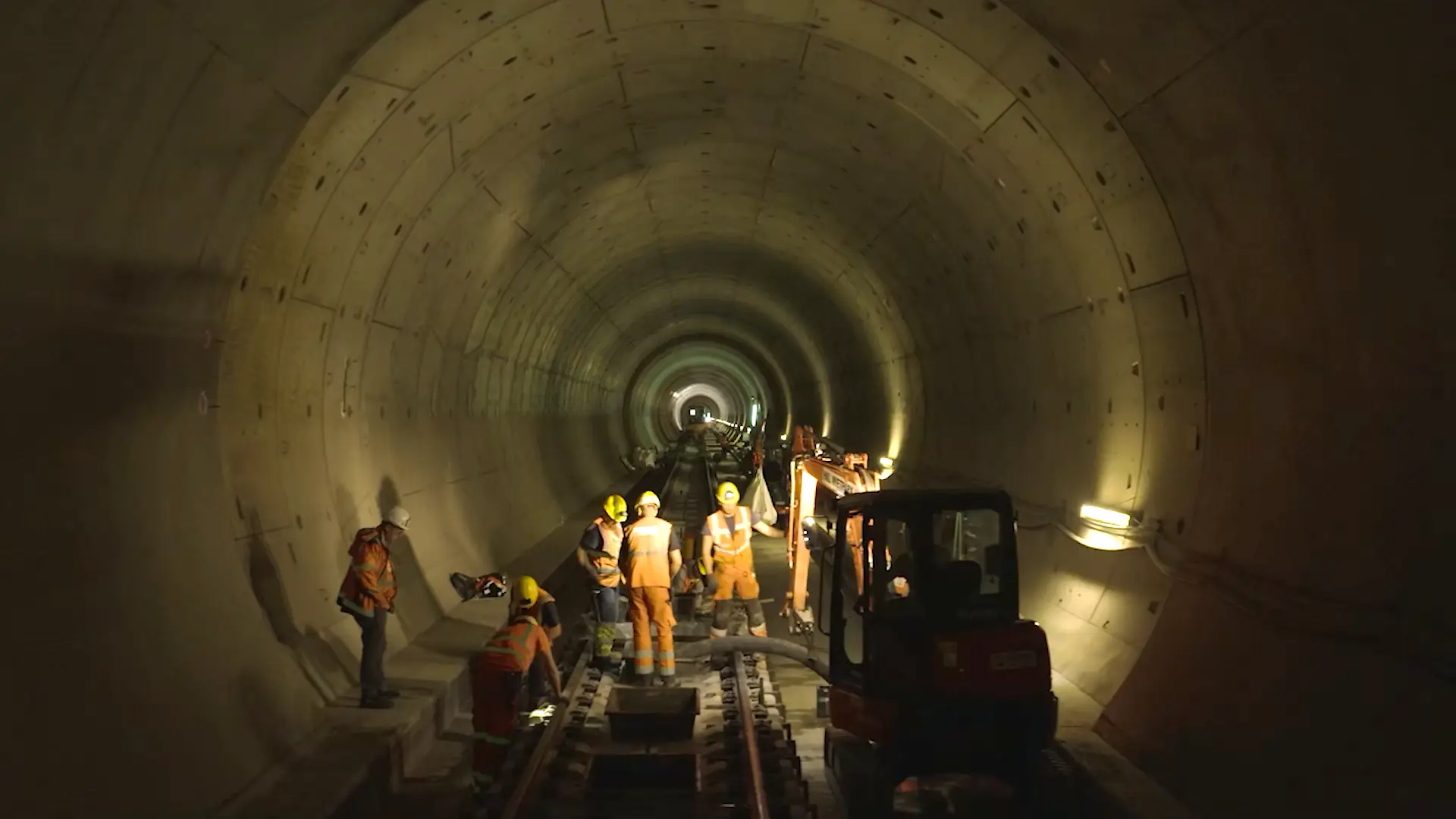
Construction management has delivered on highly complex infrastructure projects — from construction through to coordinating everyone involved.
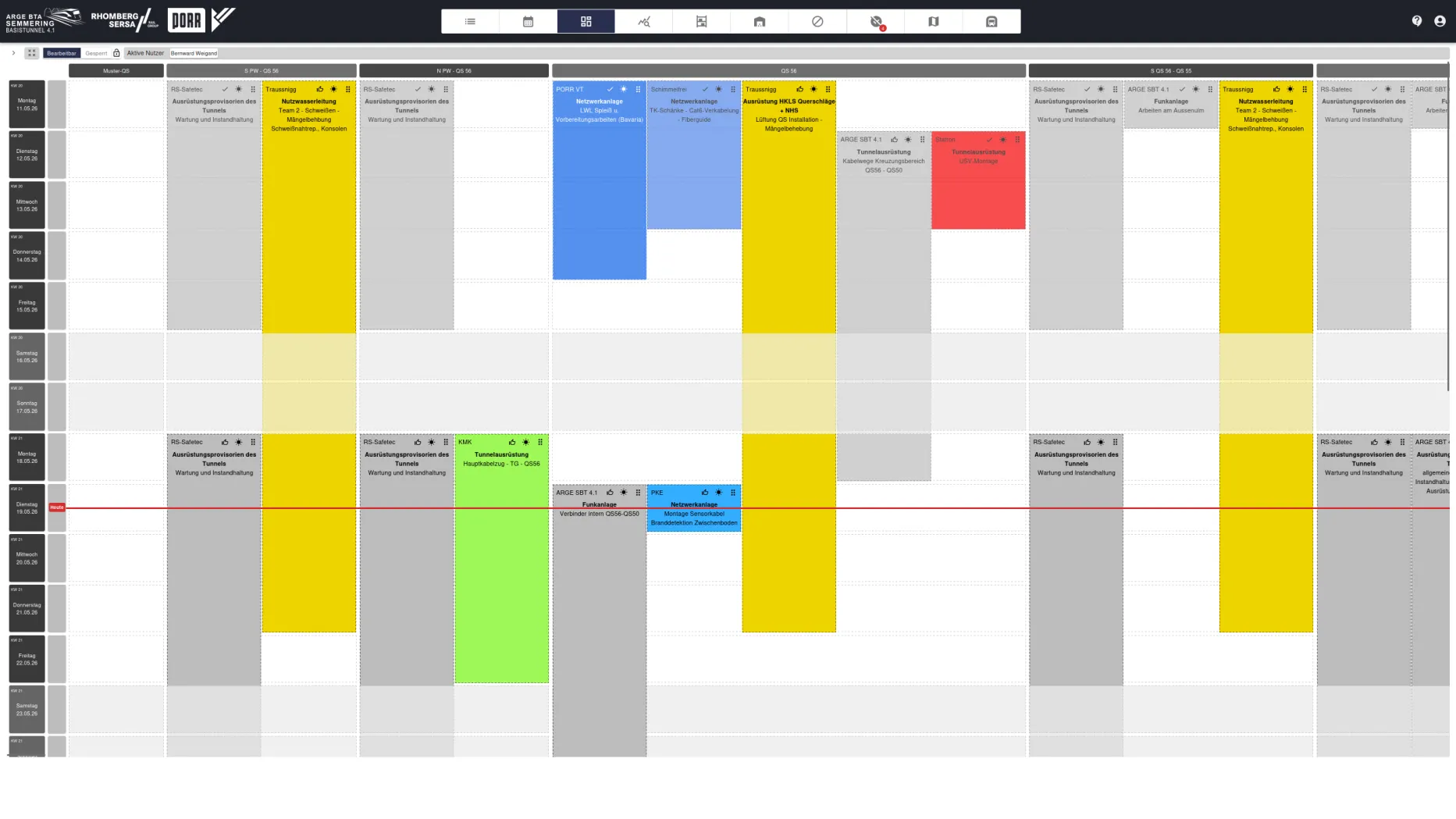
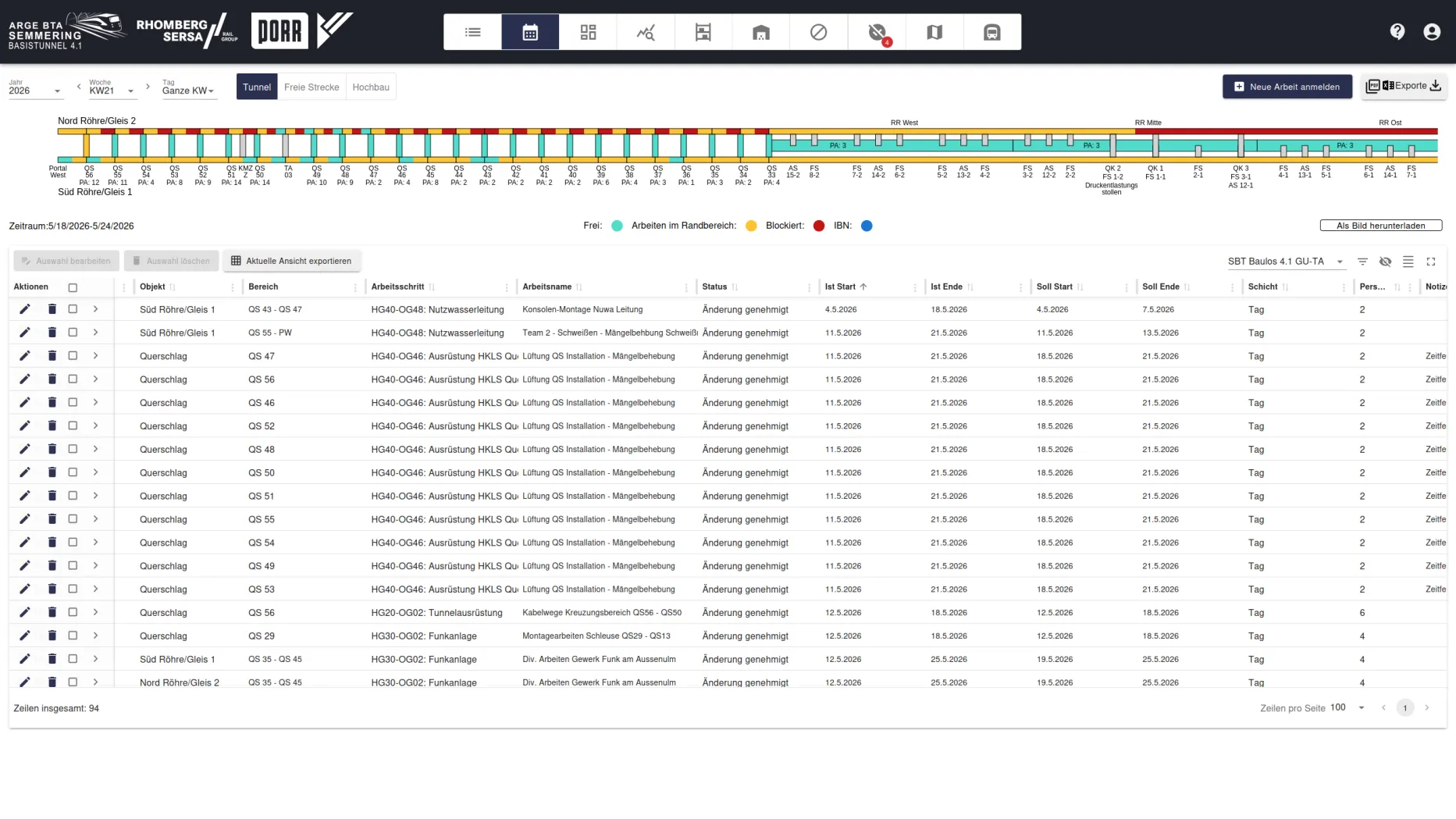
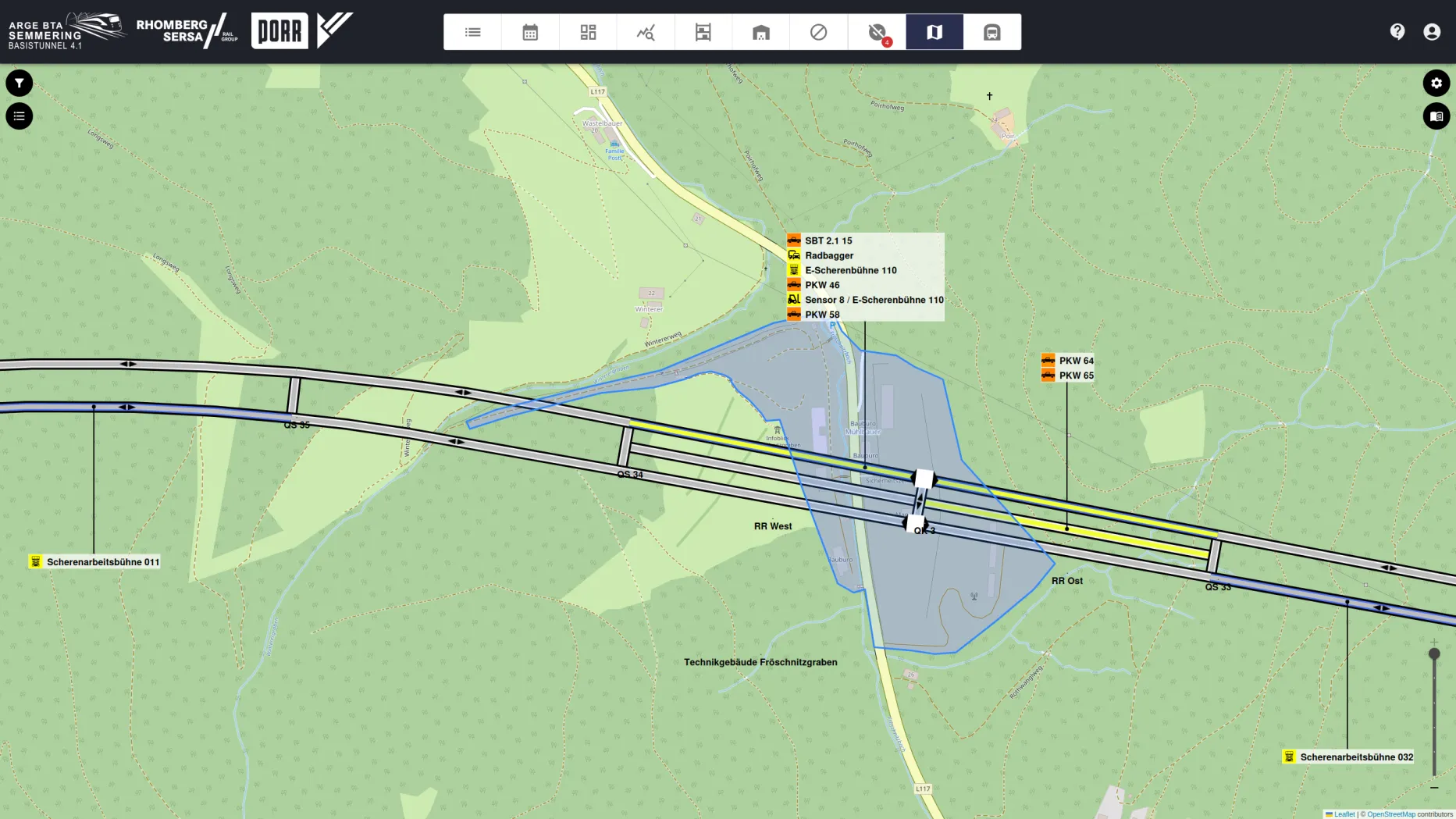
This is what the control centre looks like in operation: at the Semmering Base Tunnel, trade planning, calendar, analytics and overview map all draw on the same, continuously updated data.
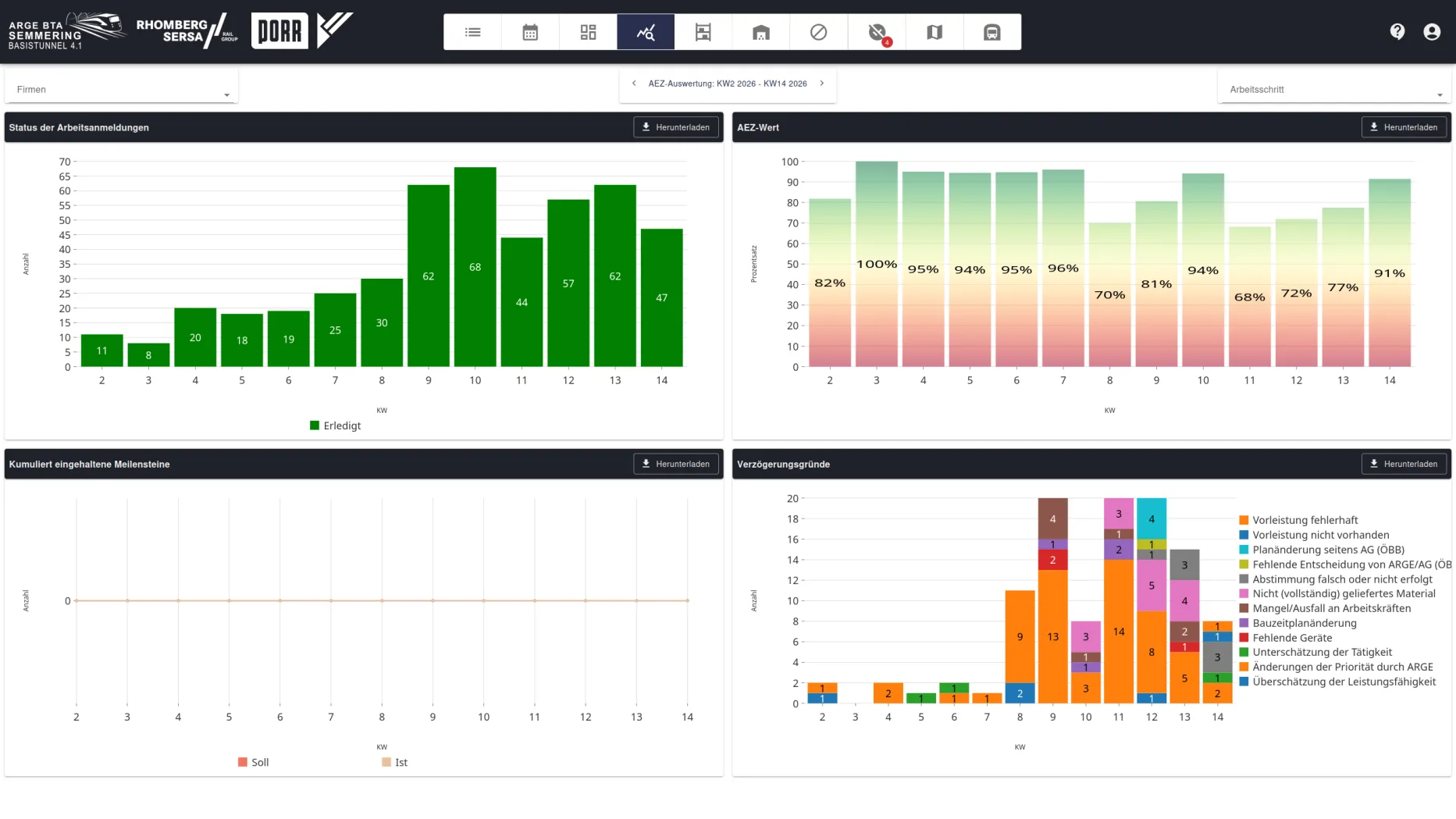
Analyses of work registrations, key figures and reasons for delay by calendar week — an ongoing basis for coordination decisions.
From the on-site requirements analysis to ongoing operation — a clearly structured process tailored to your project and everyone involved.
What a digital control centre is, how it saves costs and how it helps day to day on site: the key answers on construction management. How the planning before construction comes about is shown on our simulation page.
See all questionsA digital control centre shows the current state of a construction site in one place: which works are registered or under way, where vehicles, equipment and personnel are, and which quantities have actually been installed. Instead of piecing progress together from lists, phone calls and separate systems, everyone involved sees the same, continuously updated picture. Construction management by BII GmbH is such a control centre: it brings existing planning data, sensors and the operating systems on site together.
On large sites, extra costs often arise where deviations are noticed too late: trades get in each other's way, deliveries back up, and there are no reliable figures for claims or delays. A digital control centre makes deviations visible early, brings coordination between trades into one place and records the quantities actually installed as a basis for measurement, billing and evidence. Real-time tracking of personnel and equipment also helps to avoid accidents and the delays they cause. At the Koralm Tunnel there were no further schedule delays after the platform was introduced.
Best through a shared platform on which every trade registers its works per construction section and sees what is planned when and where. A weekly plan based on lean construction principles, with an approval status per activity, shows overlaps between trades and time windows before they become a problem on site. Coordination then happens in one central place instead of by phone, email and separate meetings. For many contractors, coordinating subcontractors is the typical way into construction management.
With data that is captured continuously during execution, instead of reconstructing it afterwards from lists and emails. A digital control centre records which works were registered and carried out, which causes of delay occurred in each calendar week and which quantities were actually installed. The result is a traceable record over time that serves as a basis for notices of disruption, claims and billing towards the client.
Three routes, and they combine freely: manual capture through a phone app on site, automatic tracking via QR codes on prefabricated material and IoT sensors on site vehicles that also report load volume — or the middle ground, where each measure is decided on effort, value and the accuracy you actually need. In practice the middle ground is the norm: expensive or critical quantities are tracked automatically, everything else stays with the lean manual entry.
Yes. Construction management is modular: you can start with a single building block, for example logistics management or coordinating your subcontractors, and add further building blocks later. We work out which starting point brings the most together in the requirements analysis, ideally right on the project: in our experience, putting questions directly to the people involved pays off, especially when subcontractors are heavily involved. If you wish, we first test the building block as a pilot on an ongoing project.

Tell us briefly about your project — we will get back to you personally within one working day.
Thank you! We will get back to you shortly.