Buildability · Insight
8 construction challenges and their common root cause
Schedules, models, logistics plans: there is no shortage of information. Why construction projects still stall, and what all these problems have in common.
 Michaela Schlichting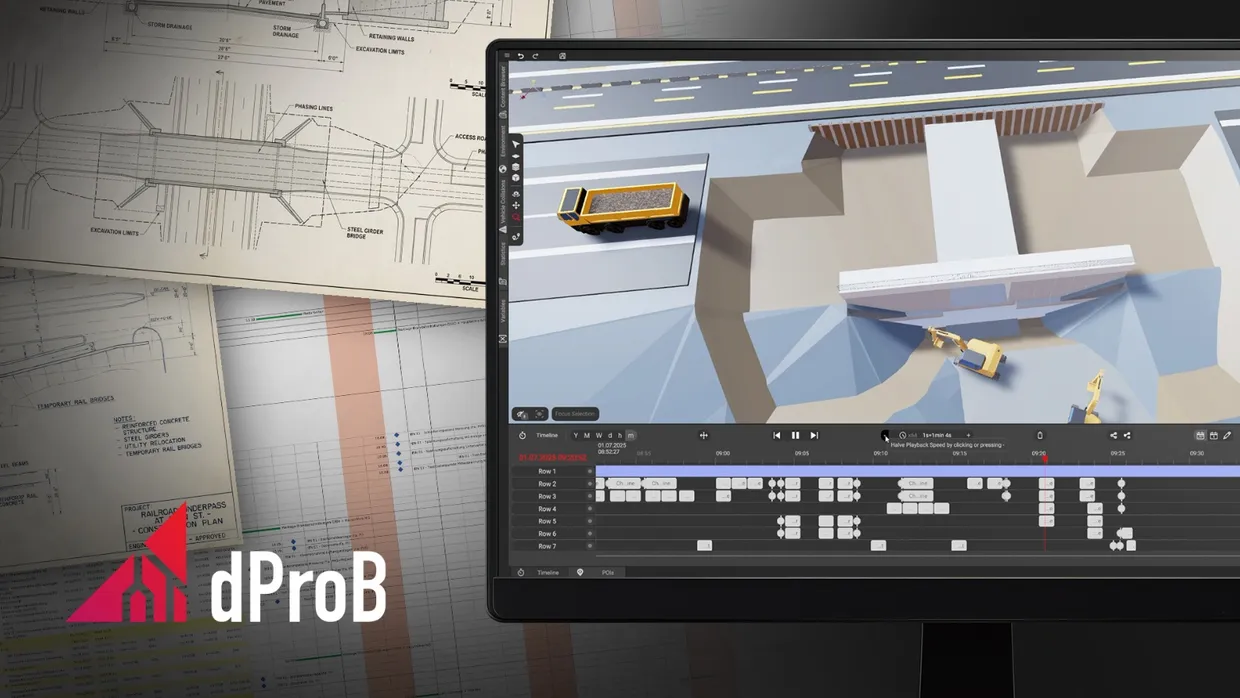
The biggest construction challenges share one root cause: there is plenty of information, but it is not connected. Schedule, 3D model, logistics plan and bill of quantities are often created separately. A clear picture of the construction process does not emerge from them on its own. We asked our engineers which eight challenges they run into most often on projects.
Construction challenges start with scattered knowledge
1. Lots of information, no shared picture
Every construction project draws on a long list of inputs: schedules, 3D models, phasing plans, logistics plans, bills of quantities and resource plans. Most of them exist side by side. On complex projects, someone often has to assemble the overall construction process “in their head”.
Very experienced people often manage this well. But it is hard to pass on, and it is a real hurdle for less experienced team members.
2. Different perspectives on the same project
Planners tend to see a project through their own discipline. Construction companies bring knowledge of methods, logistics, resources and what can actually be built. Owners often lack a tool to combine these views into one reliable picture and assess it.
Gaps between phases and parties
3. Planning and execution are separate
Planning often runs for years. Once execution begins, the construction company starts planning the process again, on its own basis and in more detail. Knowledge and context get lost along the way, and assumptions from planning do not always match how the work is actually done.
4. Every project is one of a kind, with many parties
Location, construction methods and constraints differ from project to project. At the same time, many parties work together: owner, planners, construction company, project management, specialist designers and subcontractors. They bring different skills, interests and levels of information, and often work in different places at different times.
Risks surface too late
5. Buildability is checked too late
A plan can be correct on paper without anyone checking whether it can be delivered under real site conditions. This buildability only becomes clear when schedule, space, logistics, resources, construction methods and dependencies are looked at together.
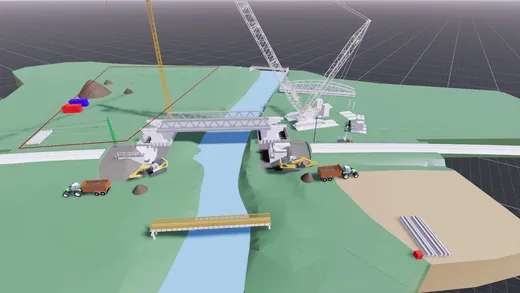
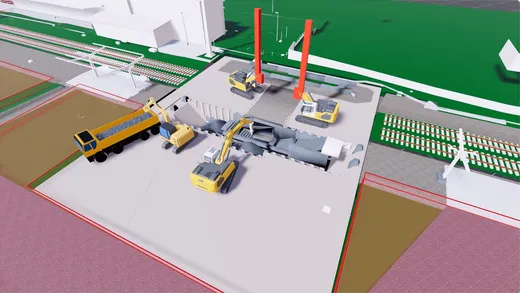
The replacement of the Else railway bridge for DB InfraGO shows how closely these factors are linked. The entire job had to fit into a 55-hour track possession. The simulation revealed that the planned excavator could not reach its work area because existing infrastructure was in the way. Moving it lengthened the haul routes for the spoil, and the possession would have been overrun. Extra trucks would have made up the time, but caused congestion at a bottleneck. Only with adjusted haul roads and passing places did the process work, and all of this before construction started.
6. Errors only show up during execution
Planning errors, coordination problems and unrealistic assumptions are often spotted only on site. On top of that come errors made during execution itself. Every project manager knows the result: delays, extra costs, redesigns and change orders.
7. Vague tender documents turn into change orders
Unclear or incomplete plans and tender documents leave room for interpretation. Construction companies often spot these risks, and potential change orders, as early as the bidding stage. During execution, they turn into extra costs and disputes.
New methods need more than technology
8. Established ways of working change slowly
Many processes, roles and ways of working in the industry have grown over decades. New digital or collaborative methods therefore have to do more than work technically. They also need to fit into existing structures and offer every party a clear benefit.
Conclusion: the missing link is a testable big picture
All eight challenges lead back to the same question, one that many projects cannot answer with a shared, reliable view:
What is to be built when, where and how, with which resources and under which dependencies, and will the planned process actually work?Marlon Gilfert, COO & Head of Process Engineering
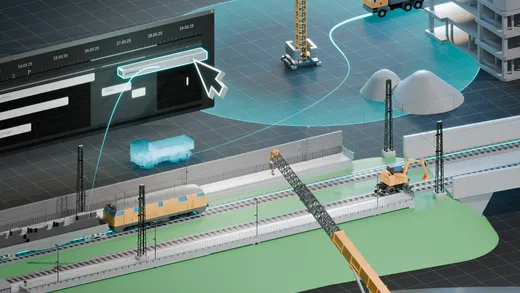
This is where construction process simulation comes in. It connects the existing information into a model of the construction process and tests whether it holds up under real conditions. Our next article explains how this differs from pure visualization. Our process engineering page shows how we approach it.
Frequently asked questions
What are the biggest challenges in construction projects?
The biggest challenges include a missing big picture despite plenty of information, buildability checks that come too late, and gaps between planning and execution. Add to that many parties with different perspectives, risks that surface late, and unclear tender documents that lead to change orders.
What does buildability mean?
Buildability describes whether and how a plan can be delivered under real site conditions. It requires looking at schedule, space, logistics, resources, construction methods and dependencies together.
How can change orders in construction be avoided?
Change orders often stem from unclear or incomplete plans and tender documents. The earlier the planned construction process is tested as a whole, the less room there is for interpretation, and the less often risks surface only during execution.

Free download · PDF · 2 pages
How solid is the big picture of your project?
8 questions, one for each challenge. In ten minutes you will see where information in your project still sits side by side instead of fitting together.
Thank you! Your download is ready. We have also sent you the file by email.
Open the PDF