Twelve weeks of possession: simulation secures the sequence
Rebuilding Neupetershain station in Lusatia (Brandenburg, Germany) was the anchor measure in a bundle of works sharing one twelve-week track possession. Seven specialist disciplines placed demands on the same limited area at the same time. The construction process simulation showed when, where and why those demands collide, and proved that the sequence fits into the twelve weeks.
The challenge
The goal was a construction sequence that actually works under real conditions, entirely within the twelve-week possession. As the anchor measure, it set the pace for all other trades. The real bottleneck, however, was space: existing trees reduced the usable site area. At the same time, the columns and structures of the historic platform canopies were to be dismantled, refurbished on site and reused. Refurbishment, for example by sandblasting, needed extra space that competed with every other construction process.
- Limited areas for work, storage and removal
- Tree protection: protection zones take away usable area
- Heritage protection: temporary space needed to refurbish the canopy structures
- Different demands of the disciplines on the same area
- Planning partly incomplete at the start
Our approach
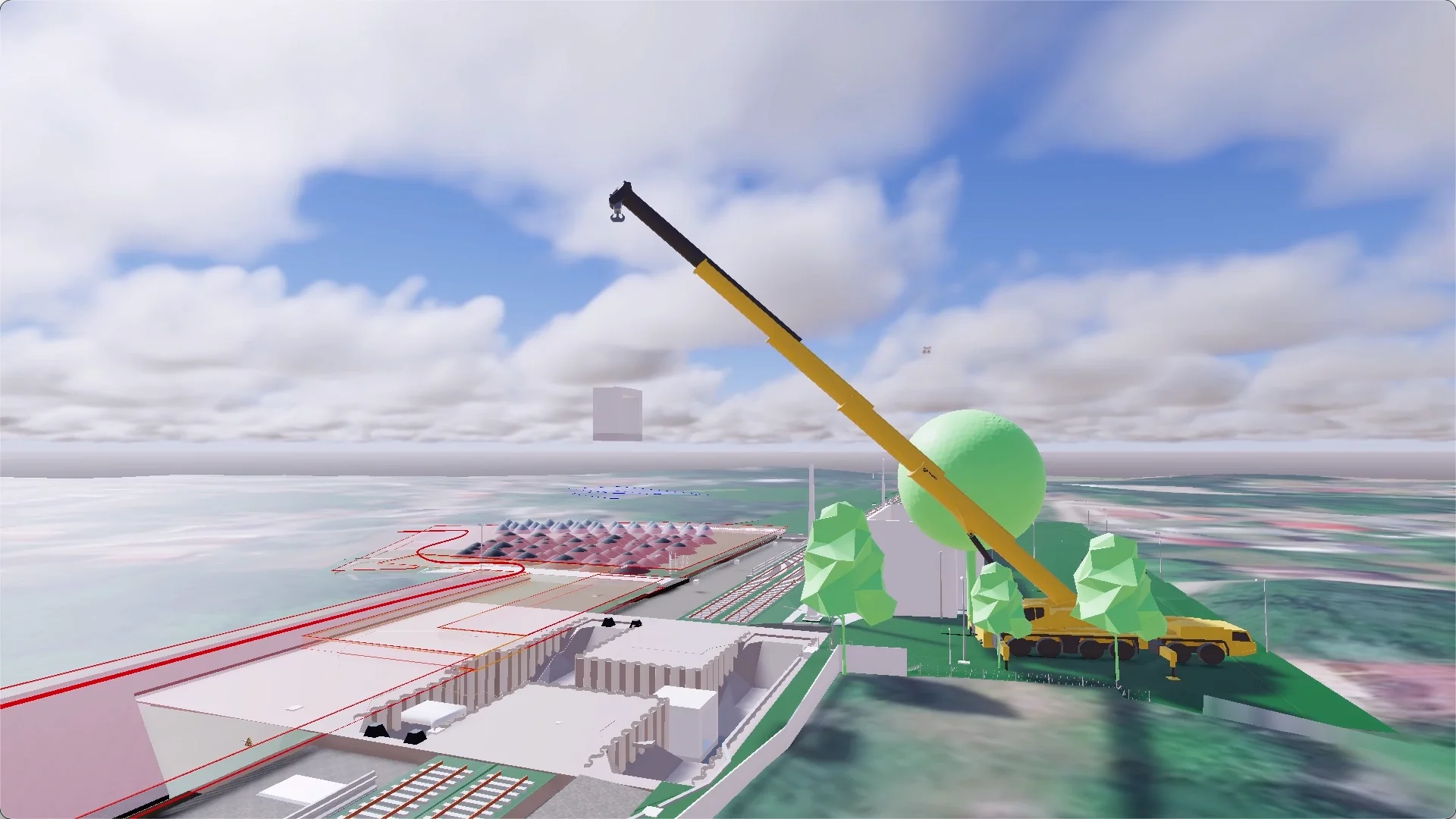
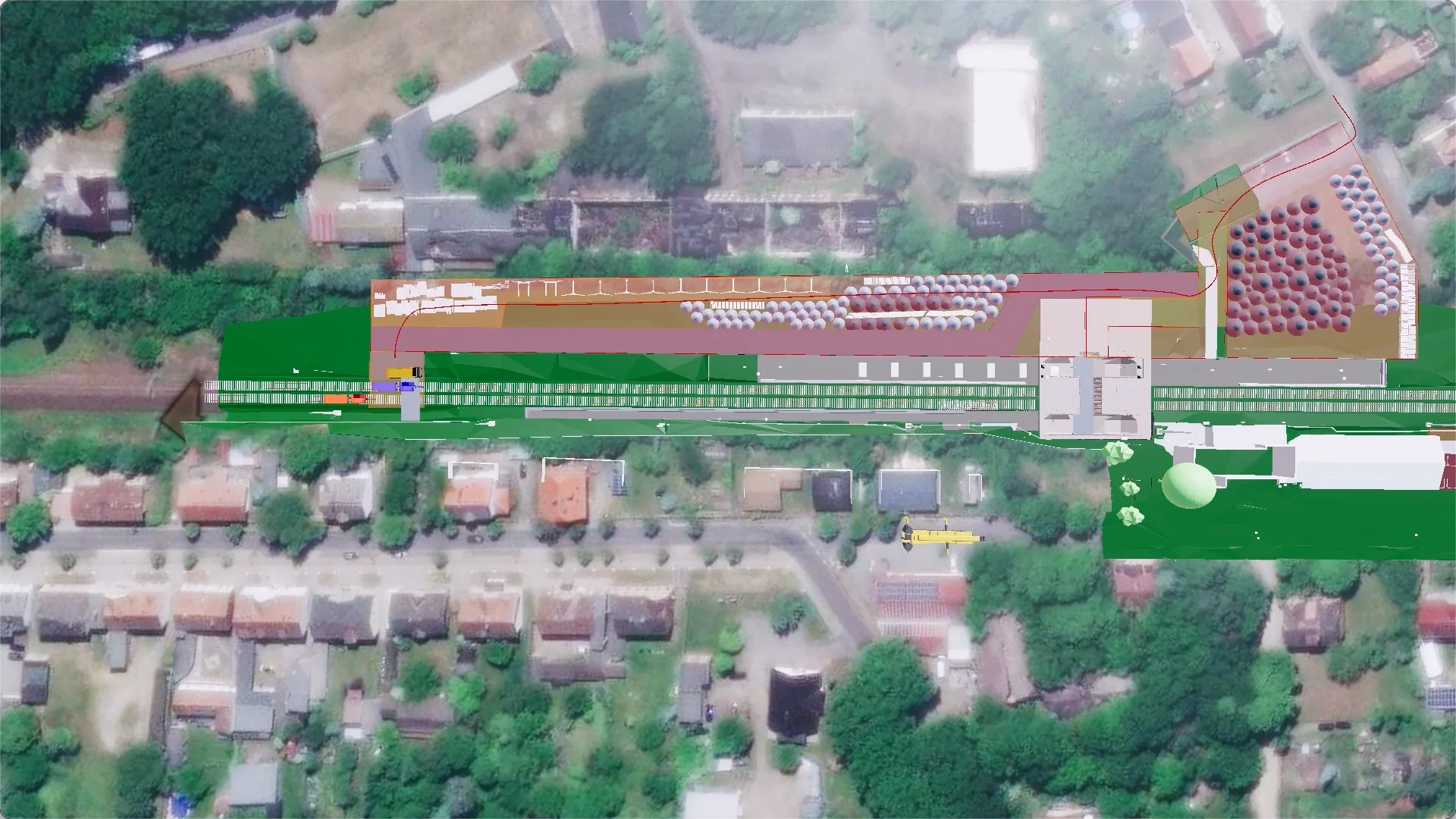
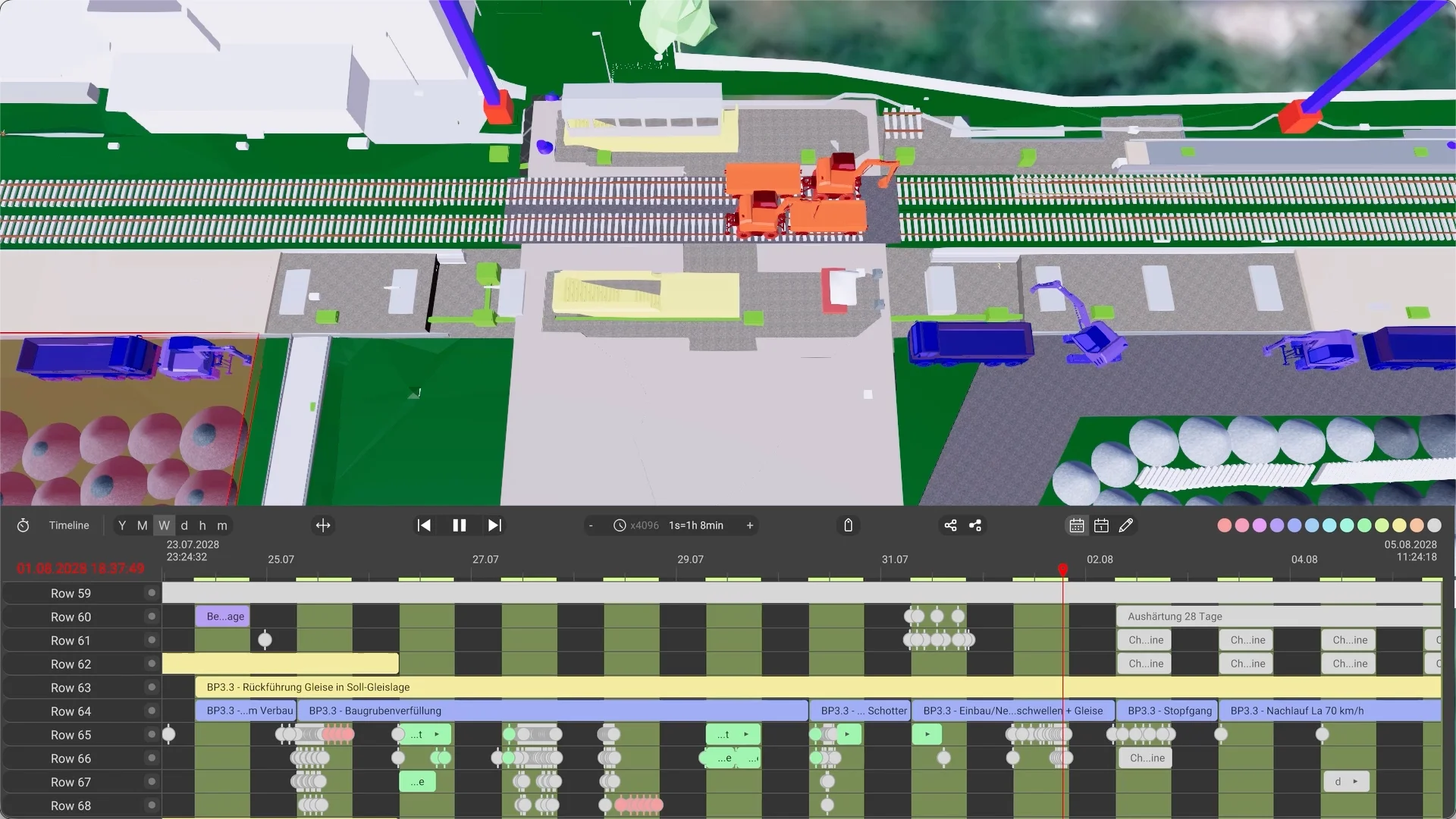
The key question was not how many tonnes of soil get moved, but: how much space does the site need at which point in time, and is the available area enough at all? We simulated the construction sequence with all trades, machines and dependencies and tracked area usage phase by phase. A construction site “breathes”: work, storage and site setup areas appear, move and disappear again.
- Available versus actually required area per construction phase
- Number and location of work, storage and site setup areas needed at the same time
- How area usage changes over the construction period
- Overlaps between trades and the bottlenecks they create
- Extra space for refurbishing the listed canopy structures
- Restrictions from tree protection
- Excavation pit options: open excavation versus sheet pile shoring
Decided before construction began
The simulation gave all parties a shared basis showing when, where and why their demands on the area collide. The conflicts could therefore be resolved before the possession began, including the decision against the open excavation pit. The end result was proof that the sequence works within the twelve-week possession.
- Proof: the construction sequence fits into the twelve-week possession
- Bottlenecks and area conflicts identified before construction
- One shared picture of the sequence for all seven disciplines
- Shoring option fixed before construction began
Seven disciplines, one area
Several specialist disciplines were involved on the DB side. This very mix was decisive: the parties sometimes had different demands on the same area and the same construction sequence.
- Team lead and discipline planners
DB passenger stations / planning team
Making sure the trades fit together technically and spatially.
- Project control and coordination
DB project management
Keeping schedules, the overall project and possessions in view.
- Digital planning basis
BIM management
Merging and coordinating the models of all parties.
- Construction methods
Construction technology & operations
Practical buildability and the necessary intermediate states.
- Site setup
Construction logistics
Areas, access roads, storage and work zones, and how they change over the construction period.
- Tree protection
Environmental protection
Existing trees and their protection zones, which reduce the usable site area.
- Historic platform canopies
Heritage protection
Preserving the canopy structures: dismantle, refurbish on site, reuse.
- The connecting element
BII · construction process simulation
Brings all perspectives into one shared model and gets all parties on the same page.
Why simulation matters most when many parties are involved
The more disciplines have a say, the more demands compete for the same area, and the harder they are to weigh against each other in drawings and meetings. Each discipline first sees its own part.
The simulation translated all seven perspectives into one shared model that runs phase by phase. That made conflicts concrete: when, where and why they arise. They could then be resolved together before the possession began.
- Project management: Proof that the sequence fits into the twelve-week possession.
- Planning & BIM: The models of all trades merged into one sequence and checked spatially.
- Construction technology: Construction methods and intermediate states tested for buildability.
- Logistics: Areas, access roads and storage zones clarified for every point in time.
- Environment & heritage: Tree protection and the refurbishment of the canopies firmly built into the sequence.
From identified conflicts to a validated solution
Conflicts uncovered by the simulation were resolved with the project team and validated again, before the possession began rather than during it.
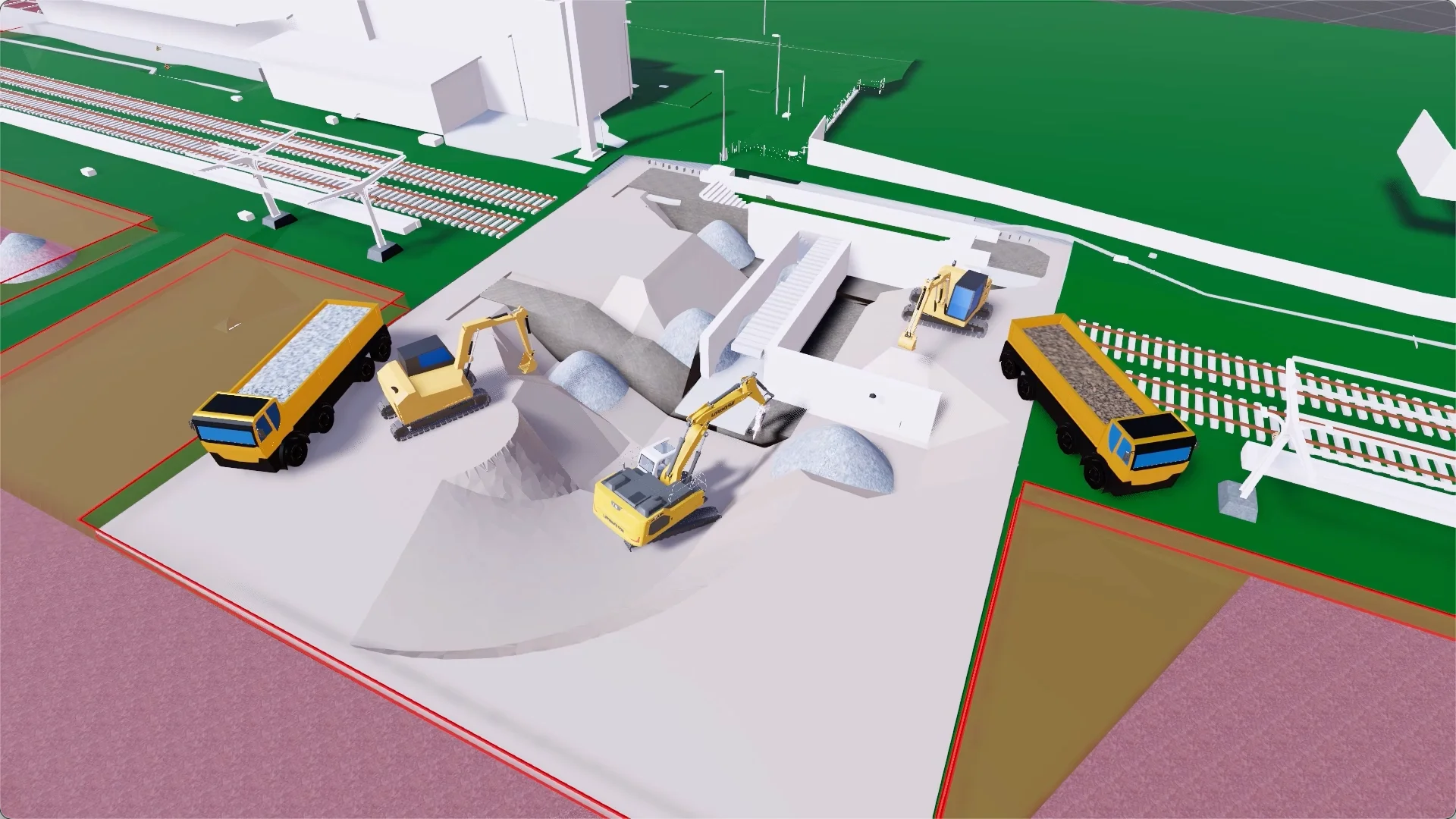
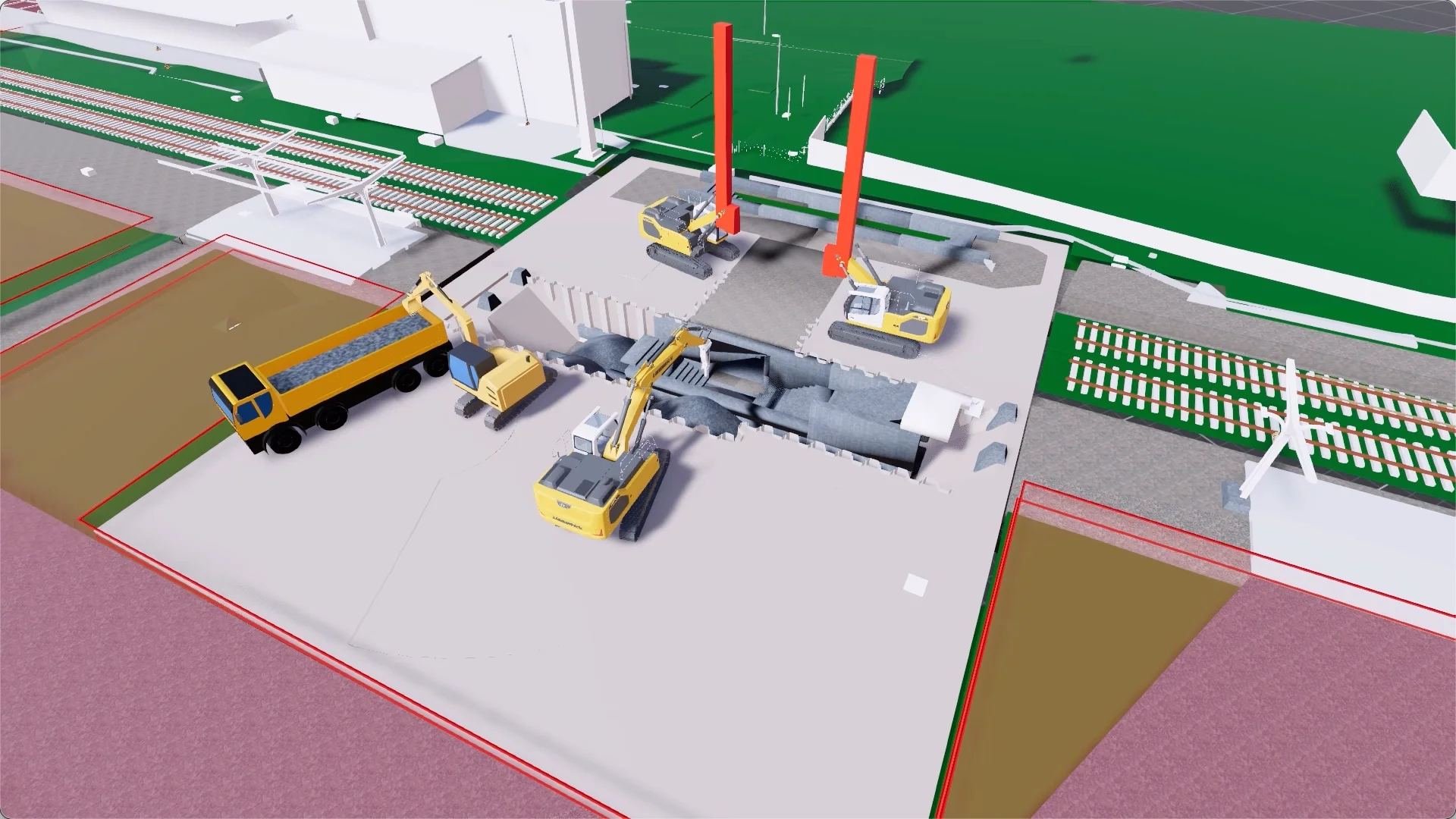
An open excavation pit would have required a considerable amount of additional excavation. There was not enough space at the station to excavate and temporarily store it.
A shored pit with sheet piles: no additional excavation and therefore no extra space needed.
From the simulation model
Why is construction process simulation worth it when many parties are involved?
The more disciplines are involved, the more demands compete for the same area and the same time window. In drawings and meetings, each discipline mainly sees its own part. Simulation brings all perspectives together in one model that runs phase by phase. It shows when, where and why demands collide, so all parties decide on the same basis.
How does simulation help when site space is limited?
A construction site does not need the same amount of space at every point in time: work, storage and site setup areas appear, move and disappear again. Simulation tracks this area usage over the entire construction period and compares it with the available area, so bottlenecks show up before construction starts. At Neupetershain station, this led to the decision for a shored pit with sheet piles instead of an open excavation.
What is an anchor measure in a track possession?
Several construction measures on a line are often bundled into one shared track possession. The anchor measure sets the pace that the other trades follow. At Neupetershain it was the station rebuild, within a twelve-week possession.
Facing a similar challenge?
Tell us about your construction project and we will show you how to safeguard the sequence in advance.
More case studies