55 hours with no slack: simulation secures a smooth construction process
A bridge replacement inside a very tight possession, with demolition, launch and reinstatement of bridge and track in the same window. The rule here: a smooth construction process, nothing left to chance. Simulating the construction process let us safeguard logistics and mass movements and head off critical conflicts early.
The challenge
The replacement of the Else railway bridge had to be delivered within an exceptionally short possession of just 55 hours. Every critical construction phase had to fit into that window: from demolishing the existing structure through lifting in and launching the new bridge to reinstating the track. There was no room for delays or unplanned events.
- A possession of only 55 hours
- Demolition, launch and reinstatement within one continuous window
- Strong interdependence between construction process, logistics and equipment
- No scope for rework or time reserves
- Safeguarding a smooth construction process before work started
How we went about it
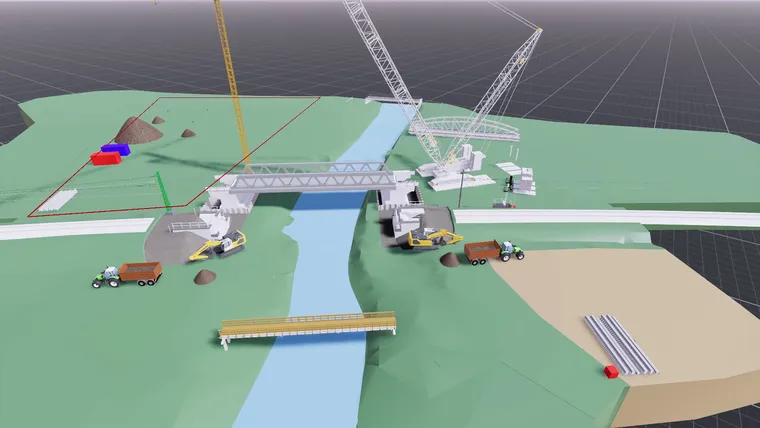
During detailed design we reproduced and analyzed the planned construction process digitally with our process simulation software. The actual output data of the intended machines, the site environment and the site setup drawings were brought together into one simulation model. By linking the construction process, logistics and spatial constraints, we could test whether the plan worked and identify potential conflicts early.
- Modeling the entire site environment
- Integrating the site setup and logistics areas
- Simulating the planned construction process with real machine and output data
- Visualizing material and mass movements
- Validating transport routes and logistics processes
- Analyzing spatial and temporal dependencies
The outcome
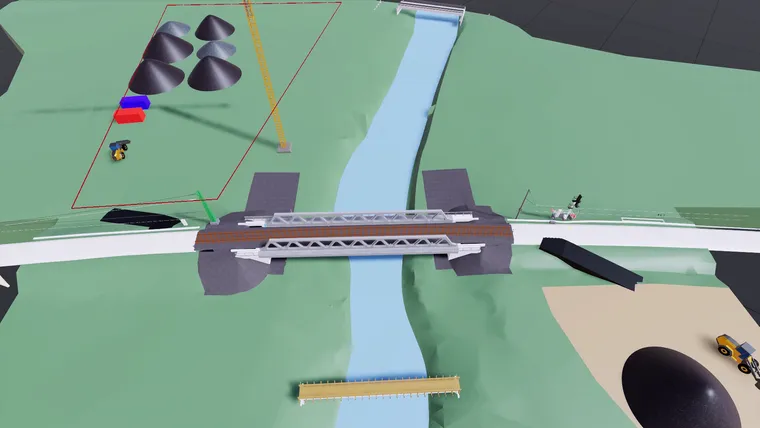
The simulation-based analysis meant critical conflicts could be identified, assessed and resolved together with the project team before construction began. The alternatives developed were simulated, validated and checked for their effect on the schedule and on logistics. The result was a robust, build-ready construction process that met the tight demands of the possession and formed a safe basis for delivery.
- Early identification of spatial and temporal conflicts
- Proof of deliverability within the 55-hour possession
- Validated logistics and transport concepts
- Transparent presentation of the construction process and mass movements
- Risk reduction before work started
- A safeguarded construction process as the basis for successful delivery
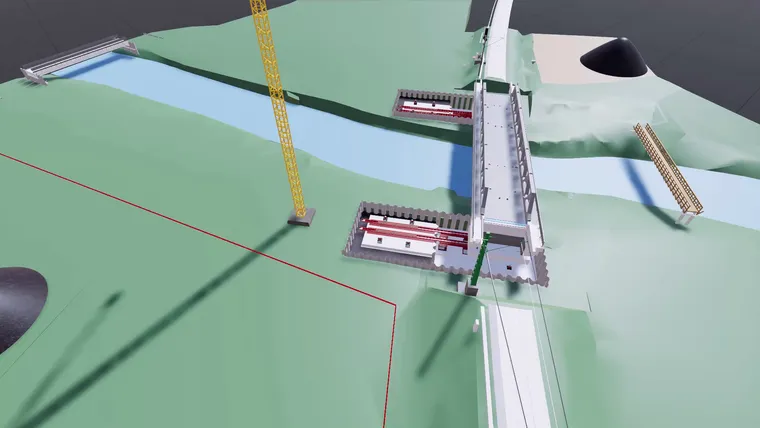
From identified conflicts to validated solutions
Spatial and temporal conflicts uncovered in the simulation were discussed in the regular project meetings, resolved and validated again — chronologically along the construction process.
The planned excavator position clashed with existing infrastructure and could not reach the working area.
Repositioning the excavator and replanning the excavation.
Moving the excavator created longer haul routes for the spoil, which would have overrun the possession.
Increasing truck capacity to compensate for the longer haul routes.
The extra vehicles caused queues at a pinch point and reduced the throughput of the logistics.
Optimizing the haul roads and adding passing places to avoid traffic bottlenecks.
A similar challenge?
Tell us about your project — we will show you how the construction process can be safeguarded in advance.
More case studies